


Thomas Walker - Letter from the front, 1915
Although Thomas Walker’s service files provide a useful if incomplete record of where he served in France and Belgium during the First World War, the discovery some years ago of the only known surviving letter he wrote from the Western front during 1915 helped change all that. Were it not for the remarkable existence of this letter, we would not know so much about him or what he saw or experienced during his first year of the war.
Thomas Walker’s remarkable letter begins in early February 1915, when he described leaving Larkhill, England, and where, according to the war diaries, his battalion had undergone “musketry and company training”. It ends in June 1915 after his Battalion was sent into reserves near Bethune, but only after they had already lost over two-thirds of their men during the heavy fighting that took place during the 2nd Battle of Ypres.
Arrival in France
On February 10th, 1915, Thomas and the 8th Battalion left for Amesbury Station and traveling by train to Avenmouth near Bristol. His battalion then sailed to France on the ship “Archimedes”.
“We set sail from there at midnight, and after a fine passage through the Bay of Biscay, which was nice and calm (a good job for us, as she was only a cattle boat) we arrived off the West coast of France, at a place called St.Nazaire, on Friday night, where we had to lie outside till Saturday morning.”
Over the course of several days under what must have been appalling conditions, his battalion traveled by train to Strazell where they arrived the following Tuesday, Feb 16th, 1915.
“We landed there at 12 noon, and we were marched to some place where we were kept standing around till about 10P.M.. Then we marched to the train and before everything was on board, as we had to take horses and transports with us, it was after midnight before we got a move out of the place. We were put in box cars which were supposed to hold either 40 men or 8 horses, and as there was only room enough when we were all standing, you can imagine what it was like when we all tried to get a sleep.”
On the 20th February, they were reviewed by Sir John French before being marched off to the front lines. After a day of marching and a day of rest, they were finally sent into the trenches on February 23rd for their “first lesson on actual warfare.”
“Well, we were put into the famous Plouge-street, better known to us as Plug Street wood, and were actually in the firing line before we knew anything about it, but it was very quiet in there at the time, so we weren’t much impressed with the Germans as fighters then.”
In early March the battalion was sent into the trenches near Fleur-Baix where Thomas reported it was “very quiet”. It was soon afterwards that the Battle of Neuve-Chapelle took place just four miles to the south, between March 10-12, 1915.
“Monday, March 1st, we left our old farm and marched to a place called Blac St.Maur, and stayed there for the night in an old factory. We left there next night for the trenches at a place called Flaux-Baix, where we were in for three days and then relieved for (an)other three days, but everything was very quiet. We had casualties there but nothing to speak of, although when one was taking in rations they were apt to get a machine gun turned on them.”
In late March their battalion moved to the town of Estaires, where on April 2nd, 1915 they heard a speech from the Bishop of London. A few days later they were marched northward to the town of Godewaerswelde, south-west of Ypres. Thomas wrote:
“Monday, April 5th, left Estaires for the longest march yet and arrived at a place called Godewaerswelde, near the frontier of Belgium. Here we had quite a nice time of it, although we were out for a short march every day. It was here that I lost the little watch you gave me before I left, so I got them to send me one from home.”
It was also here that the battalion learned that they were being sent to the front-line trenches north of Ypres.
“Sunday, April 11th, Reviewed by General Smith Dorrien, and he told the officers that they were going to a warmer part of the line, and when we knew that we all appeared to be greatly pleased with the prospect of having something to do.”
A few days later, the Battalion got there first ride in motor buses:
“April 14th, left our billets for the trenches in motor buses. The boys often heard about them, but this was the first time we had the chance of a ride to the firing line. After about 2 hours’ ride, we had another 12 Kilos to march, and on the road we passed through the much talked about Ypres, but there wasn’t much damage done to it then, bar the famous Cathedral and Cloth Hall, which were in ruins. We were taken right through that night to the trenches near (Zonnebeke)”.
A few days later Thomas recorded that he had heard the British attack on Hill 60, and how he felt upon seeing the effects of German shelling on Belgian civilians:
“Sunday, April 18th, Germans start to shell the town but didn’t do very much damage. This was the night that the British made the attack on Hill 60, and as our guns were just on the outskirts of the town, I can tell you they make some noise and we were thankful we were behind them and not in front.”
“Monday, Germans still shelling the town and making a lot of people move. In one place I saw where a shell had burst and there were quite a few old women living in some houses there, and I can tell you if you had seen them, you would have thought nothing of chasing the Germans right there.”
That same evening his Battalion was sent into the trenches of the Canadian sector in the Ypres Salient where he described how his Battalion was heavily shelled by the Germans. This was a prelude to an extraordinary event which he witnessed the following day.
“Tuesday (20th April), this day passed off very quietly, and thought we were going to have an easy trip, but there was to be rude awakening. Wednesday, Germans start to shell our trenches with high explosives and as they weren’t as good as they could have been, made matters worse. We lost our officer that day, he got wounded in the head and arm, also lost quite a few men, but that was only a start.”
Gas attack! - 2nd Battle of Ypres
On the following day, Apr 22nd, 1915, Thomas described how he witnessed the first gas attack on the Western Front against allied troops. It was on this day that the Germans discharged an estimated 160tons of chlorine gas into the Ypres Salient.
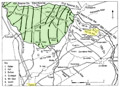 The attack routed the 45th Algerian Division who fled their trenches for safety leaving a 4 mile wide gap in the front line. It fell upon the Canadians to reinforce the exposed gap and hold that part of their line. The 8th Battalion, 2nd Brigade, led by brigade commander Arthur Currie, were involved in this action between the 22nd and 25th of April, which became known as the Battle of Gravenstafel Ridge, during the 2nd Battle of Ypres.
Thomas described this extraordinary event in his letter as follows:
“Thursday, the 22nd, still being shelled, also Ypres, which town is now in ruins, and this was also the day that they used gas on the French who were on our left. I think it was the Algerian troops, and as you know they didn’t stand it very long.”
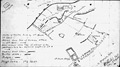 The 8th Battalion remained in their trenches for three more days holding the Germans back. On Apr 24th the Germans used gas again forcing the 3rd Canadian Brigade from their trenches. Thomas and his gun crew were sent “from the right flank to the left” to support them. After losing several of his gun crew, Thomas described the scene:
”Our trench was beginning to look like a butcher shop, and men were lying all around dead and wounded, and all one could do was to tie up their wounds and if they were able to walk they tried their best to get out, but as it was only safe to go out at night, quite a few of them got away.”
The 8th Battalion were finally relieved on Apr 25th when they withdrew a few miles south to the town of Wieltje. Thomas described the harrowing experience:
“How I managed to get back, I don’t know, as the bullets were flying all around and there was no shelter from them, so you had just to keep going. Out of our section of 32, I think we numbered about 8, next day, and the battalion something about 300 out of 1000 men…we went back about 2 or 3 miles to a place named Wiltjie and slept out in a field, but we were all so tired, we went to sleep and never felt any cold or anything else.”
Retired to Reserves
When the battle was over the 8th Battalion had lost about 2/3rd’s of their men. The following day, Thomas described what he saw as the remains of his battalion were sent into reserves outside of Ypres:
“On Monday morning (Apr 26th), we had to go in reserve, and as we had lost all our guns we had to fall in with the companies. It certainly was great to watch the battalions going up there under shell fire, and there was plenty of it flying around. At one crossroads, there were five fellows all lying knocked out with one shell, and the road down from the trenches on the Sunday night was simply awful. Horses and men lying at the side of the road, having been killed trying to get up to reinforce us, but the Germans must have seen them as they just shelled that road for all they were worth”.
As the Battalion continued their march south,
“…after we reached a certain point we were told to lie there and dig ourselves in, which had to be done everytime we had a halt, but we weren’t free from shell fire then, as we were lying beside some of our artillery and you know that they try to knock them out first, and we never knew when they would drop a shell amongst us, but they certainly put quite a few near to where we were.”
Thomas then described what he saw when the remnants of his battalion were marched through the devastated town of Ypres.
“We had to lie there till Wednesday night when we were marched back to the other side of the town of Ypres, which was a different place to what we had left.“
“Not a sound were to be heard but the howling of some dogs which had been left behind and the rattle of our transports as they galloped through, as it wasn’t healthy to stay too long there. Everyplace was as dark as night, and here and there could be seen the bodies of men and horses lying in the streets. There was one place in the street where a ‘Jack Johnson’ had lit right in the center of (the street), and one had to walk as close to the houses at the side to get past. I am sure it must have been 24 feet side and about half of that in depth.”
“We were taken to some huts 2 miles out of town and spent the night there, but next day we were shelled out of them and made ourselves some dug-outs in the field, where we were for a week”.
[Note: A Jack Johnson was a 15-cm German shell so named because of the large quantity of black smoke produced by the explosion.]
Thomas then described how the battalion spent the next few days marching between the towns of Bailleul and Busnes, where on Sunday, May 16th, their march was cancelled so they could attend a “short service in memory of our departed comrades.” On the following day, May 17th, they marched to the outskirts of Bethune where Thomas described seeing,
“…about 200 German prisoners brought in. They were a pretty dirty-looking bunch but I guess so were we at Ypres.”
Battle of Festubert
A few days later the battalion was sent into reserve trenches where Thomas described being heavily shelled, in what later became known as the Battle of Festubert.
“We left there next night (Tues 18th) and arrived in some reserve trenches where we passed the night, and the next night we were sent to the trenches at Festubert, where they had made the charge some 2 or 3 nights before and where the 13th Battalion made a charge the next day. Here we had quite a few casualties as the Germans were shelling us very heavily with heavy shells. Our section lost 8 men out of 30 itself. We were in here for three days and were relieved by the L.S.Horse, this being their first time in the trenches.”[Note: Lord Strathcona Horse]
Thomas next described a close call while being shelled in the trenches:
“It was here I had a very narrow escape. There were five of us all sitting together, when a shell burst close to us and caught three of them, two of them have since died of wounds. I sure thought it was all over that time as there was a dixie of tea at our feet and I got the contents in my face, so I consider myself very lucky.”
Givenchy
After this the 8th Battalion spent the last week of May in reserve trenches near Bethune. On June 1st, 1915 they were sent into the trenches near Givenchy, where Thomas described being shelled by their own guns:
“Next day (June 2nd) was quiet but on the 3rd the Germans started to throw all kinds of shells around but we had very few casualties. In some places the trenches were within 40 yards of one another. On Friday, we lost one of our boys of the gun crew, through one of our shells dropping short and bursting in the dugout, where 3 of them were sleeping, but it only caught one of them, taking his right arm off, but I heard he had died since.”
“June 5th, relieved by the 7th Batt. but as we had to lie in reserve trenches only 20 yards behind, it was worse than the front line.”
The following day the Battalion was sent into reserve billets outside of Bethune where they stayed until the middle of June, and where Thomas mentioned they were finally able to get rid of their much despised Ross rifles, which they exchanged, “…for the short Lee Enfield during that time”.
The letter closes at the end of June 1915, when the 8th Battalion were marched to “Plugstreet Wood”. Here his letter ends on a positive note, where he described his current circumstances as:
“…5 days in the front, and 5 days out, and up to the present it has been nice and quiet.”
Soon after his letter ended and while still with the 8th Battalion, 2nd Brigade, Thomas Walker was promoted to unpaid Lance Corporal in August 1915.
Copy of original Letter
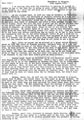 |
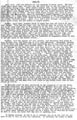 |
 |
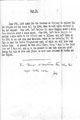 |
| Page 1 | Page 2 | Page 3 | Page 4 |
On the last page of the original is a comment, probably written by his brother John Walker, who said: “Thomas meant to continue this when his next letter came. John”.
No other letters from Thomas Walker that were sent during the war are known to have survived.
 Copyright © 1996-2025 TwoCreek :: All rights reserved