


The Drocourt-Queant Line, Sep 1918
In March 1918 the Germans began a surprise spring offensive intending to end the stalemate on the Western Front with a breakthrough that penetrated deep into Allied lines and almost separated the British and French Army’s. The situation became very dire, and as General Currie put it in a speech to his troops soon afterwards, “Today, the fate of the British Empire hangs in the balance”.
Currie argued that rather than put the Canadian troops on the defensive, the Canadians Corp would attack instead. In planning their offensive, an elaborate subterfuge was carried out to convince the Germans that the Canadians planned to attack at Flanders. Instead, the entire Canadian Corp was marched in total secrecy, to Amiens.
The Amiens offensive began on August 8th, 1918 and marked the beginning of a major counterattack by the Canadian Corps on the German lines. The initial attack was a great success and by the following day the German lines had been breached and the Canadians had pushed 13 kms into German held territory. Two days later, August 10th, the Canadians had pushed the Germans back an additional 24 kms and had taken over 10,000 prisoners. The German offensive had been stopped, and the tide of the war reversed.
On August 26th, 1918, the Canadians began the battle of Arras which required them to break through a succession of heavily fortified systems of trenches.
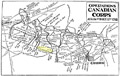 Tenacious fighting forced the Germans into retreat and by early September, the Canadians had reached a critical barrier, the Drocourt-Queant Line, part of the famous Hindenburg line and a defensive system that the Canadians would have to overcome. The battle for this line lasted two days, and against the odds, the Canadians overwhelmed a larger German force and breached 1,500 yards of barbed wire and trenches.
As General Arthur Currie described the battle in a speech he gave on Aug 29, 1919 at Massey Hall,
“The Drocourt-Queant Line is the front line and support line, well wired in front, five hundred yards (deep) and then another line with more wire, six or seven hundred yards heavily wired and another line. In this battle there were nearly 10,000 prisoners taken. There were ninety-eight guns taken, a penetration of 20,000 yards made, the Hindenburg system for the first time pierced, and eighteen German divisions fought and decisively beaten.”
The breaking of the formidable Drocourt-Queant Line by Currie’s Canadians is considered one of the greatest Allied successes of the war.
War Diaries
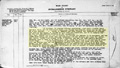
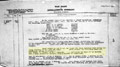
Thomas Walker and his gun crew played a decisive part in this battle, which was significant enough to warrant a mention in the War Diaries of the 1st Battalion, C.M.G.C. for Sept 2nd, 1918:
“’A’ Battery, is passing through Cagnicourt, came under intense shell and M.G.fire, and at this point Capt.G.C.Ferrie was wounded, being hit in the foot by a M.G.bullet. Lieut. E.Hancock was also injured and temporarily missing. The work of Sgt. Major T. Walker at this time was excellent, and it is largely due to him that the Battery suffered so few casualties.“
“When Capt. Ferrie was put out of action, he ordered the Limbers to be unloaded, and the Crews immediately got their Guns and Equipment off the Limbers and ready for action. Sgt. Major Walker took charge of No.2 Section, and had the Guns rapidly mounted, bringing fire to bear on an enemy M.G. nest, which was firing at the Battery at point blank range. After some minutes of gruelling fire, the enemy fire from this nest was beaten down and the Transport enabled to retire with the loss of only three horses and one limber. The remainder of the Guns of the Battery were then mounted in commanding positions and fire was brought to bear on targets of enemy Infantry on the slopes in front of Buissy.”
This action, like so many other heroic efforts by Canadian troops of the C.M.G.C. during the battle, also warranted mention in C.S.Grafton’s (1938), “A History of the Canadian Machine Gun Corps”, p.172.
“No. 1 Company of the 1st Battalion C.M.G.C. advanced with the 1st C.I.B., which found itself committed to the fight at one stage when the advance of the 3rd Battalion was too rapid.. "A" Battery, passing through Cagnicourt, came under heavy fire and when Capt. Ferrie and Lieut. Hancock were wounded Sergt.-Major T. Walker took command.
His quick work saved the Battery further casualties though three horses and one limber were knocked out before he extricated the group and then took up positions from which he poured a grueling fire onto the enemy.
For these actions during the battle of the Drocourt-Queant Line at Cagnicourt on 2nd Sept 1918, Thomas Walker was “awarded the D.C.M (Distinguished Conduct Medal), for conspicuous gallantry and devotion to duty”.
The success of the battle of the Drocourt-Queant Line was vital to the Canadians in that it paved the way for the storming of the Canal du Nord, the capture of Cambrai and the subsequent march to Mons and the Armistice.
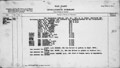
War Diaries of the 1st Battalion, C.M.G.C. - Sept 2-4,1918
 Copyright © 1996-2025 TwoCreek :: All rights reserved